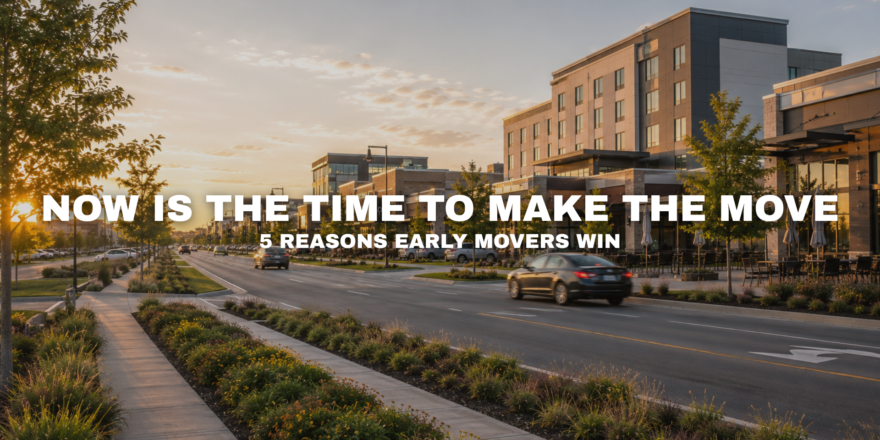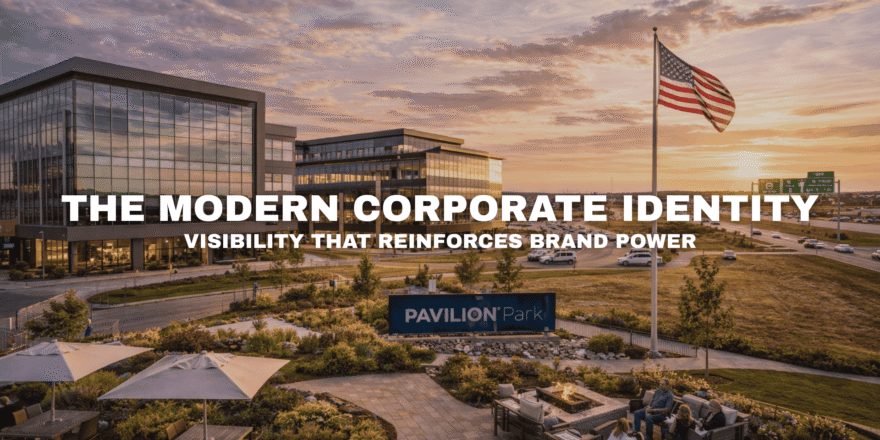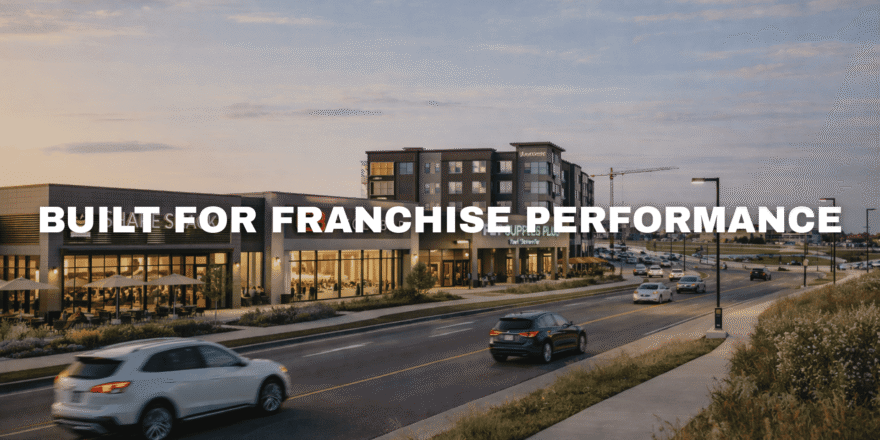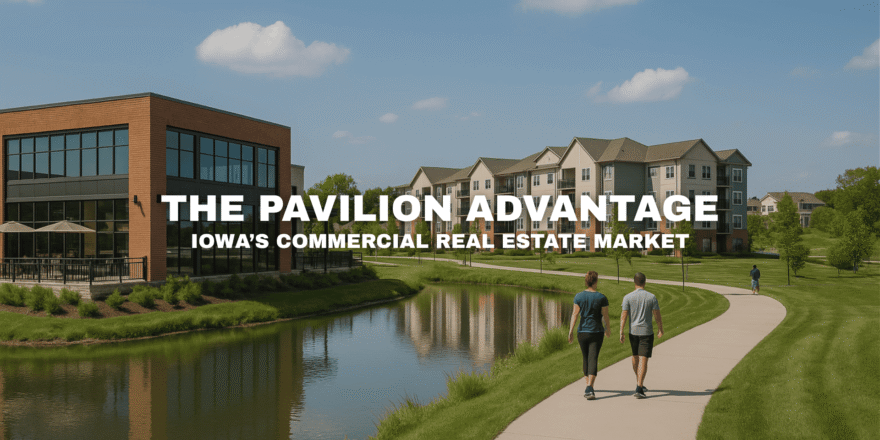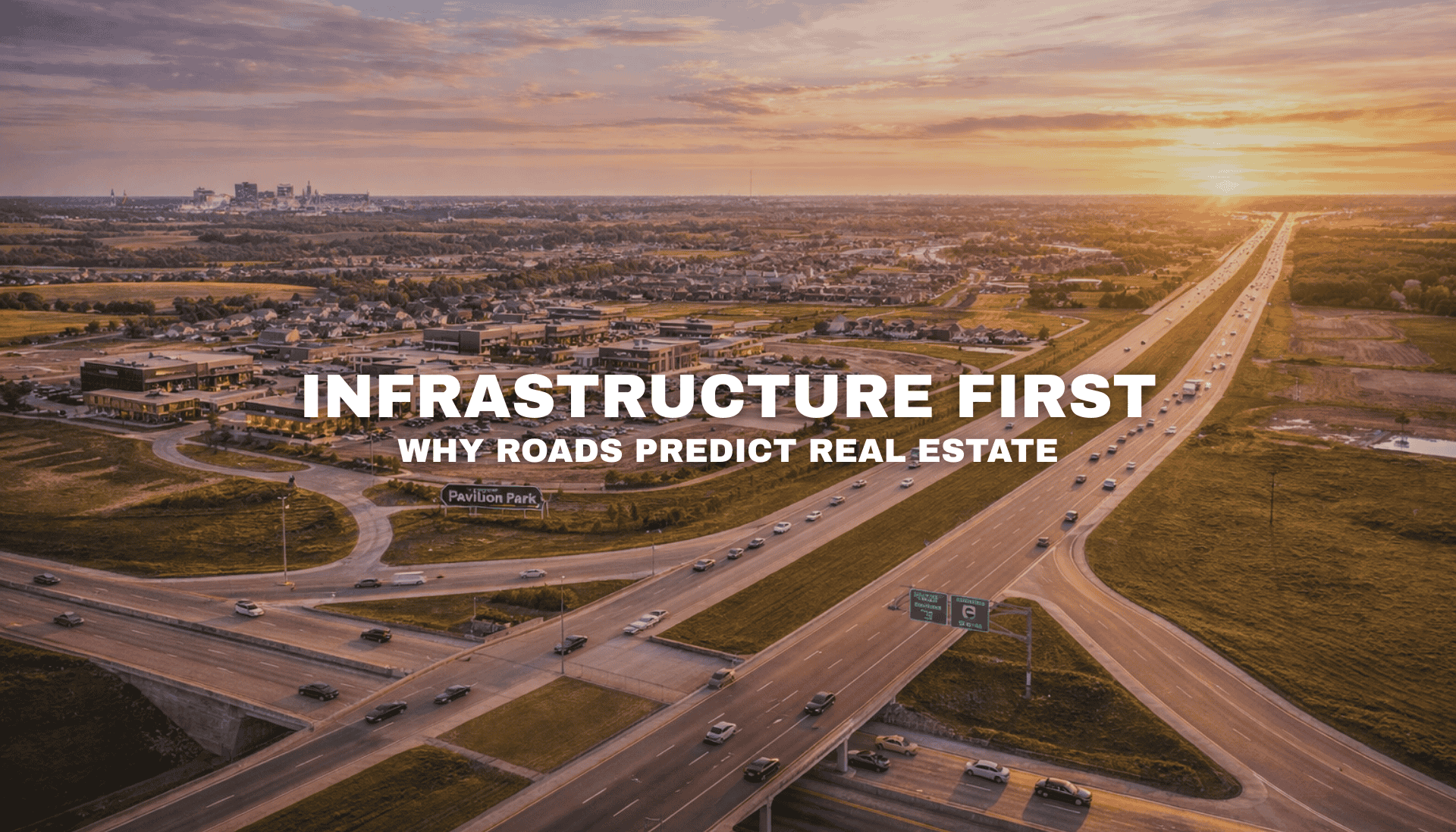
Grand Prairie Parkway development is not a short-term expansion story — it is a 10-year transformation corridor. What began as an infrastructure investment has evolved into one of the most important commercial growth drivers in West Des Moines and greater Dallas County.
At the center of this corridor sits Pavilion Park — positioned directly along Grand Prairie Parkway and minutes from the I-80 interchange. To understand the long-term opportunity at Pavilion Park, you have to zoom out and examine the broader movement of commercial gravity westward.
Because this isn’t isolated development.
It’s infrastructure-led momentum.
Infrastructure First: Why Roads Predict Real Estate
In commercial real estate, infrastructure investment typically precedes large-scale value creation. Major corridors like Grand Prairie Parkway do more than connect points on a map — they redirect economic flow.
Over the past decade, Grand Prairie Parkway has:
• Strengthened the north-south connection between Waukee and West Des Moines
• Improved direct access to Interstate 80
• Reduced congestion on legacy east-west routes
• Opened significant tracts of commercial land to viable development
This has quietly reshaped traffic patterns. Retailers, hospitality groups, and office users follow traffic — and traffic follows infrastructure.
That is why I-80 corridor commercial land tied directly to Grand Prairie Parkway is commanding growing attention from developers.
The 10-Year Pattern of Westward Expansion
West Des Moines commercial growth has historically followed a clear trajectory:
- Residential growth moves outward
- Infrastructure extends to support it
- Early retail and service nodes form
- Office and hospitality follow
- Pricing and density accelerate
We are currently in stages three and four along the Grand Prairie corridor.
Rooftops are increasing. Schools are expanding. Traffic counts are stabilizing at sustainable levels. And regional connectivity has been firmly established.
Pavilion Park benefits from entering the cycle before full corridor maturity — meaning it captures both present demand and future appreciation.
Why the I-80 Interchange Matters
The Grand Prairie Parkway interchange at I-80 is one of the most strategically significant transportation nodes in the region.
Interstate 80 carries approximately 55,000+ vehicles per day through this stretch of central Iowa. That volume creates:
• Regional visibility
• Hotel viability
• Logistics efficiency
• Destination retail potential
• Corporate access advantages
But what makes Pavilion Park different from direct interstate frontage sites is its balance. It sits immediately adjacent to the interchange — close enough to capture visibility and convenience, yet positioned within a master-planned environment that supports long-term placemaking.
That distinction matters.
Pure highway sites often struggle to evolve into mixed-use destinations. Pavilion Park is designed to do exactly that.
The Corridor Effect: Why Nodes Outperform Isolated Sites
Successful suburban commercial corridors function as linked nodes rather than standalone projects.
Grand Prairie Parkway now connects:
• Pavilion Park (south, near I-80)
• Kettlestone Lakes (north, near Waukee growth)
• Expanding residential districts
• Established West Des Moines retail anchors
This creates a corridor effect — where growth at one node reinforces the next.
Developers evaluating Dallas County development corridors increasingly view Grand Prairie Parkway not as a single address, but as a commercial spine.
Pavilion Park is positioned at the gateway of that spine.
What This Means for Developers
For investors and site selectors, corridor timing is everything.
Entering too early can mean speculative waiting. Entering too late can mean inflated acquisition costs and limited design flexibility.
Grand Prairie Parkway is past speculation — infrastructure is complete, traffic is flowing, rooftops are established — but it is still early enough in the 10-year arc to offer strategic entry pricing and parcel availability.
Pavilion Park offers:
• 260+ acres of master-planned commercial land
• Flexible parcel configurations
• Infrastructure already in place
• High-visibility frontage
• Mixed-use integration potential
Few corridors in Iowa offer this combination at this stage of maturity.
The Next Decade of Growth
Looking forward, several macro factors reinforce the strength of this corridor:
• Continued Dallas County population growth
• School expansions driving youth and family density
• Westward housing construction
• Corporate decentralization into suburban nodes
• Interstate-driven logistics and hospitality demand
As these factors converge, land along major infrastructure corridors tends to experience:
• Faster absorption
• Increasing lease rates
• Appreciation in per-acre values
• Stronger brand interest
Pavilion Park is aligned directly with those forces.
Why Pavilion Park Is the Strategic Entry Point
Grand Prairie Parkway development has moved beyond concept and into execution. The next 10 years will determine which sites become permanent anchors of the corridor.
Pavilion Park benefits from:
• Immediate I-80 access
• Visibility without congestion
• Scale large enough to support destination uses
• Flexibility for hospitality, office, retail, and mixed-use
• Positioning between West Des Moines and Waukee growth nodes
It is not just on the corridor.
It defines the corridor’s southern gateway.
The Bigger Picture
Commercial real estate rewards those who understand infrastructure timelines. Grand Prairie Parkway is no longer a future promise — it is an active economic engine.
As West Des Moines commercial growth continues to push outward, and as I-80 corridor commercial land becomes more competitive, Pavilion Park offers a rare opportunity:
To build within a corridor that is still ascending.
To secure frontage before peak pricing.
To participate in the 10-year reshaping of the western metro.
The corridor is forming.
The infrastructure is proven.
The next chapter belongs to those who move strategically.