In commercial real estate, location is often measured by traffic counts, demographics, and accessibility.
But there’s another factor that carries just as much weight — and is often overlooked:
First impression.
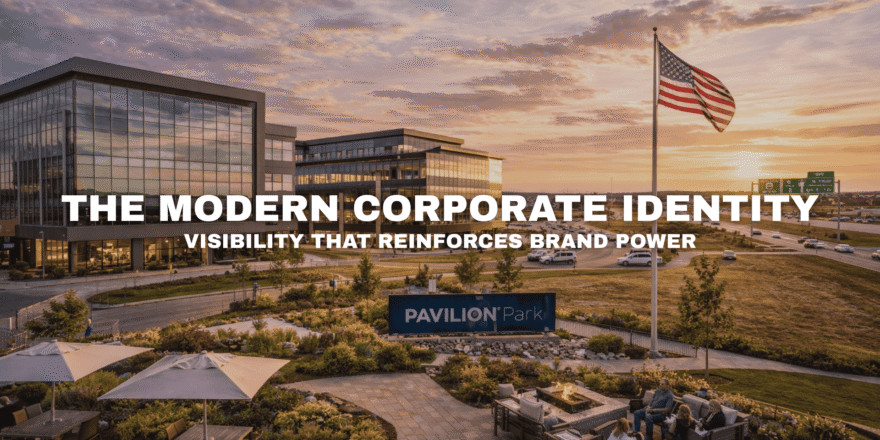
For the rapidly expanding western corridor of the Des Moines metro, that first impression is defined by Pavilion Park.
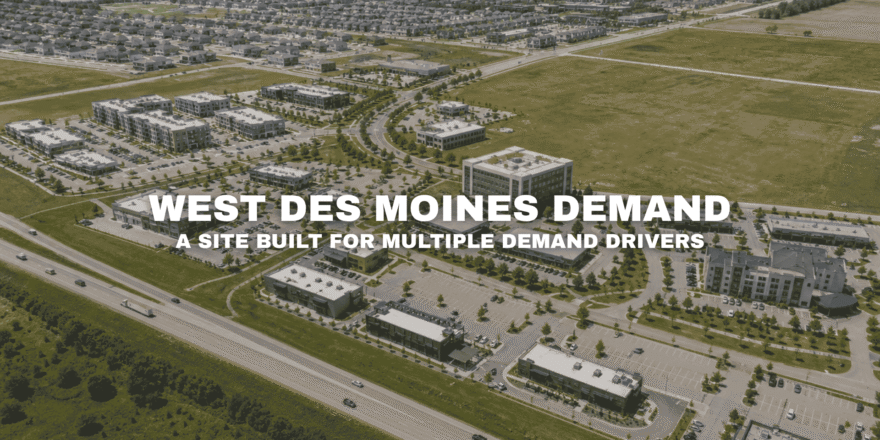
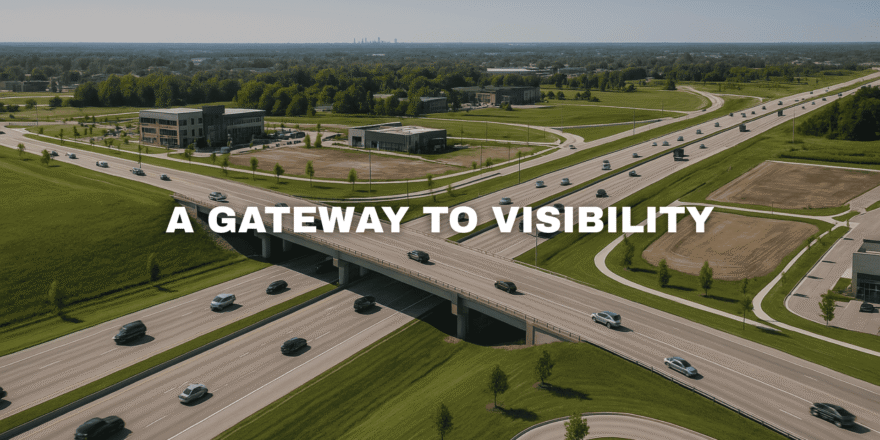
Positioned directly along Interstate 80 at the Grand Prairie Parkway interchange, Pavilion Park functions as the front door to one of the fastest-growing commercial and residential corridors in Iowa.
And in development, the front door matters.
Why Gateways Drive Commercial Value
Gateway locations operate differently than interior sites.
They are:
- The first point of entry into a market
- The first brand exposure for visitors
- The first decision point for stopping, turning, or continuing
This creates a unique advantage.
Businesses located at gateway sites benefit from:
- Immediate visibility
- Higher impulse traffic
- Stronger brand recognition
- Early capture of customer intent
For Pavilion Park, this means capturing both interstate travelers and corridor-bound traffic before it disperses north into Waukee and surrounding developments.
The Strategic Importance of I-80
Interstate 80 is one of the most significant transportation corridors in the Midwest, carrying tens of thousands of vehicles daily through the Des Moines region.
At this interchange, I-80 delivers:
- Regional business travel
- Cross-state logistics movement
- Weekend leisure traffic
- Corporate and event-related visits
Pavilion Park sits at the exact moment where that traffic makes a decision:
Exit — or continue.
That decision point is where commercial opportunity is created.
Grand Prairie Parkway: Directing the Flow North
Once traffic exits I-80, Grand Prairie Parkway becomes the primary channel guiding movement north.
This corridor connects:
- West Des Moines
- Pavilion Park
- Expanding residential neighborhoods
- Kettlestone Lakes and the broader Waukee development area
Pavilion Park’s position at the base of this corridor allows it to:
- Capture initial traffic
- Influence where visitors stop
- Shape the perception of the corridor as a whole
It is not just part of the corridor.
It introduces the corridor.
Setting the Tone for What Comes Next
Gateway developments do more than generate revenue.
They define expectations.
When visitors exit I-80 and encounter Pavilion Park, they are forming an impression of:
- The surrounding area
- The quality of development
- The types of businesses present
- The overall experience of the corridor
A well-executed gateway creates a perception of:
- Growth
- Energy
- Opportunity
- Quality
That perception carries north — influencing how people experience the rest of the corridor, including destinations like Kettlestone Lakes.
Why National Tenants Prioritize Gateway Locations
For national brands, gateway positioning is highly strategic.
It offers:
- Maximum exposure with minimal market entry
- Brand visibility to both local and regional audiences
- Early positioning within emerging growth corridors
- Strong traffic validation for underwriting and expansion
At Pavilion Park, tenants gain:
- I-80 frontage
- Direct access via a major interchange
- Placement at the beginning of a high-growth corridor
- Long-term upside as surrounding density increases
This combination is difficult to replicate once a corridor matures.
Capturing Traffic Before It Spreads
One of the biggest advantages of Pavilion Park is timing within the traffic flow.
Instead of competing for customers further along the corridor, businesses here:
- Capture drivers immediately off the interstate
- Intercept traffic before it disperses
- Establish brand recognition early in the trip
This is especially valuable for:
- Restaurants and dining concepts
- Hotels and hospitality
- Convenience and service retail
- High-visibility flagship locations
The earlier you capture attention, the stronger your position becomes.
A Gateway That Supports Long-Term Growth
Pavilion Park is not designed as a one-off interstate stop.
It is a master-planned development with:
- 260+ acres of commercial opportunity
- Mixed-use integration potential
- Infrastructure already in place
- Connectivity to surrounding growth nodes
This allows the gateway to evolve alongside the corridor — maintaining relevance as density increases.
Instead of becoming outdated, it becomes more valuable over time.
The Ripple Effect on the Corridor
When a gateway performs well, it lifts everything around it.
Pavilion Park contributes to:
- Increased traffic flow along Grand Prairie Parkway
- Stronger perception of the corridor as a destination
- Greater interest from developers and tenants
- Reinforcement of westward commercial expansion
This ripple effect benefits not just Pavilion Park, but the entire network of developments extending north into Waukee.
Why Timing Matters at the Front Door
Gateway locations are limited.
Once they are built out, opportunities shift further down the corridor — often with less visibility and higher competition.
Pavilion Park still offers:
- Available parcels
- Flexible development options
- Early positioning within a rising corridor
- Direct connection to interstate traffic
That combination represents a strategic entry point that becomes harder to access over time.
The First Move Matters Most
In growing markets, the first interaction often determines the next.
Where people stop.
Where they return.
Where they recognize brands.
Pavilion Park sits at that moment of decision.
As the front door to West Des Moines’ westward expansion and the broader Dallas County growth corridor, it offers something few sites can:
The ability to shape perception before the rest of the market is even seen.
For developers, tenants, and investors, that is not just a location advantage.
It is a positioning advantage.