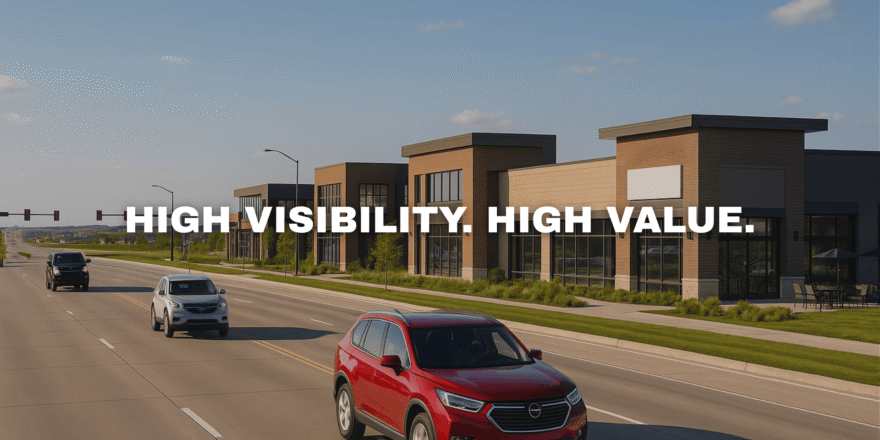
There is a moment in every business owner’s site selection process where the spreadsheet stops being enough. The cost comparisons, the demographic reports, the traffic studies — all of it gets you to a shortlist. But the final decision usually comes down to something harder to quantify. It comes down to whether a place feels like somewhere a business can genuinely put down roots and grow.
For a long time, that feeling pointed people toward the coasts. New York, Los Angeles, Miami, Seattle — the assumption was that proximity to money, talent, and cultural energy was the prerequisite for serious business ambition. That assumption is being tested in a significant way right now, and Iowa is one of the places doing the testing.
Iowa business climate advantages are not a new story, but the audience paying attention to that story has changed considerably. National franchise operators, regional chains, independent entrepreneurs, and corporate real estate teams are all running numbers on Midwest markets that they would have passed over a decade ago. What they are finding is that the case for Iowa is not just about saving money. It is about finding a place where the conditions for long-term success are genuinely present.
Why Iowa Business Climate Advantages Are Getting National Attention Now
The timing of this shift is not accidental. Several things have happened simultaneously that have made the Midwest more visible to businesses that used to default to coastal markets.
Remote work reshuffled where people are willing to live, and a meaningful portion of that reshuffling went toward markets with lower costs and higher quality of life. Iowa was a beneficiary. As those households arrived, consumer spending followed, and the commercial demand that trails residential growth began to materialize in markets like West Des Moines in ways that were not there before.
At the same time, the cost of doing business in high-density coastal markets kept climbing. Real estate, labor, regulatory compliance, state and local taxes — the gap between what it costs to operate in California or New York versus what it costs to operate in Iowa widened to the point where it became impossible to ignore in a financial model.
The Iowa Economic Development Authority has been deliberate about capitalizing on this moment, building programs designed to attract large-scale investment and make the process of locating in Iowa straightforward rather than bureaucratic. That posture matters. It signals to businesses that the state is a partner in growth rather than an obstacle to it.
1. A Tax Climate That Rewards Business Investment
Iowa has made meaningful progress in recent years on the tax side of the equation. Individual income tax rates have been reduced, and the state has worked to align its business tax environment with the goal of attracting rather than discouraging investment.
For operators comparing markets across multiple states, Iowa business climate advantages in the tax category consistently show up favorably against Northeastern, mid-Atlantic, and West Coast alternatives. That favorable position is not just about the rate itself. It is about the predictability and stability of the environment, which matters enormously for businesses making long-term real estate and capital commitments.
2. A Workforce Built on Retention, Not Just Recruitment
Employee turnover is one of the most consistently underestimated costs in business. The expense of recruiting, hiring, and training a replacement employee is significant in any industry, and in categories like food service, retail, hospitality, and healthcare it can be a chronic drain on profitability.
Iowa business climate advantages in the workforce category show up most clearly in retention. The quality of life that the state offers, particularly in communities like West Des Moines, gives employees reasons to stay that go beyond the paycheck. Good schools, safe neighborhoods, affordable housing relative to wages, and a genuine sense of community are not abstract benefits. They are the conditions that produce workforce stability, and workforce stability produces better customer experiences and lower operating costs over time.
The concentration of major employers in West Des Moines, including Wells Fargo, Athene, and Holmes Murphy, reflects a labor market that has already demonstrated it can attract and retain professional talent at scale. A new business opening in this corridor is entering a labor market that works.
3. Central Geography That Pays Off in Operations
Iowa sits in the center of the continental United States in a way that has real operational value for businesses that move product, serve regional markets, or manage supply chains. Interstate access throughout the state is strong, and West Des Moines specifically sits at the convergence of I-80 and near I-35, two of the most important freight and travel corridors in the country.
For any business where distribution, delivery, or regional reach matters, that central position reduces costs and transit times in every direction. It also means that a location in West Des Moines can function as a regional hub without paying the real estate premium that coastal distribution markets demand.
4. Population Growth That Is Already Happening
One of the risks in a new market is betting on projected growth that takes longer to arrive than the projections suggested, or never fully arrives at all. West Des Moines does not carry that risk in the same way. The growth here is not projected. It is present.
New residential development continues to fill in around the Pavilion Park corridor along I-80 and Grand Prairie Parkway. The households forming in this area are not waiting for the market to mature before they arrive. They are here now, establishing spending patterns, choosing service providers, and creating the consistent demand that makes a business location sustainable rather than speculative.
According to the Greater Des Moines Partnership, the metro recorded 28 new and existing business location and expansion projects completed in a single recent year, with 140 active project leads in the pipeline. That level of activity does not happen in a market that is standing still.
5. Iowa Business Climate Advantages Include a Genuinely High Quality of Life
This one matters more than it gets credit for in formal site selection analyses. The people who run businesses, staff them, and patronize them have lives outside of work. Markets with a high quality of life attract and hold the kind of people who make businesses successful over time.
West Des Moines has earned recognition as the number one place to live in Iowa. That ranking is built on strong schools, safe neighborhoods, abundant parks and trail systems, and a community investment in the kinds of amenities that make daily life genuinely enjoyable. For a business owner deciding where to invest years of effort and capital, that quality of life is not a peripheral consideration. It is part of the foundation.
6. Lower Cost of Entry With a Real Ceiling for Growth
Commercial real estate in Iowa markets like West Des Moines costs significantly less per square foot than comparable positions in coastal metros. That lower cost of entry means businesses can acquire better-positioned sites for the same capital outlay, or enter the market with meaningfully less risk on the real estate side.
At Pavilion Park specifically, that equation is favorable right now because the corridor is still in an active development phase. Entry prices reflect the early stage of the market rather than a fully mature one. The ceiling for both real estate appreciation and business performance is high precisely because the market has not yet reached its full potential. That combination, lower entry cost and higher growth ceiling, is not easy to find in markets that have already been thoroughly discovered.
7. A Development Partner That Has Done the Hard Work Already
Iowa business climate advantages are most accessible when the site itself is ready for business. That is where Pavilion Park and Landmark Development change the calculation in a practical way. The land is master-planned. Zoning is in place for commercial, mixed-use, and multi-family development. Infrastructure is either complete or under active construction. The surrounding uses are mapped and in motion.
A business coming into Pavilion Park does not have to navigate raw land, figure out entitlements, or hope that the surrounding area develops in a complementary direction. That groundwork has been laid by a development team whose job is to create the conditions where businesses succeed. That is a different starting point than most sites offer, and it compresses the timeline between decision and operation in a meaningful way.
Frequently Asked Questions About Iowa Business Climate Advantages
What makes Iowa’s business climate competitive with other states? Iowa offers a favorable tax environment, strong workforce retention, central geography, lower commercial real estate costs, and a state government that is actively oriented toward business attraction and growth. Taken together, these factors make the total cost and ease of operating in Iowa highly competitive with most alternative markets.
Why is West Des Moines specifically a strong choice within Iowa? West Des Moines combines the strongest demographics in the Des Moines metro with exceptional interstate access, a major retail anchor in Jordan Creek Town Center, a high quality of life that attracts and retains workforce, and active new development creating both residential and commercial momentum simultaneously.
Is Iowa a good market for national franchise expansion? Yes. Iowa’s cost structure, workforce stability, and population growth in cities like West Des Moines align well with what franchise operators look for in a new market. The lower cost of entry and strong consumer spending in the West Des Moines corridor make the financial model work at a level that is difficult to match in more saturated markets.
What is available at Pavilion Park right now? Pavilion Park has 125 acres of commercial parcels currently available for retail, restaurant, office, hospitality, medical, and multi-family development. Contact the Pavilion Park team to discuss specific site availability based on your business requirements.
How do Iowa business climate advantages compare to neighboring Midwest states? Iowa is consistently competitive on tax climate, workforce quality, cost of living, and geographic position relative to neighboring states. For businesses evaluating the broader Midwest, Iowa and specifically the West Des Moines market offer a combination of factors that is difficult to match across the region.