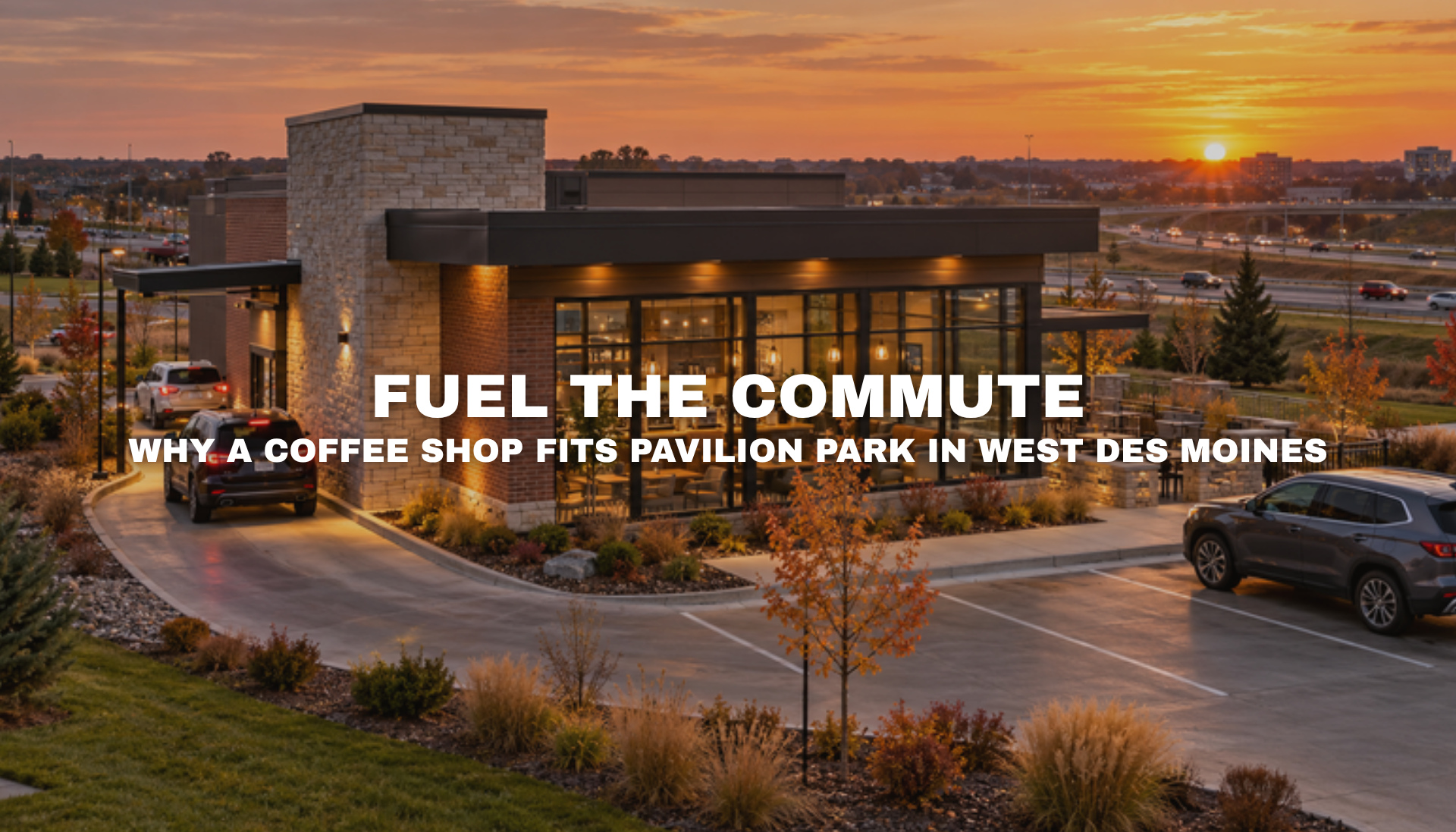
Cold mornings change the way a suburb buys coffee. When the temperature drops in November, the drive-thru line gets longer and the daily cup stops feeling optional. That seasonal shift is one reason a coffee shop West Des Moines commuters can reach without a detour makes so much sense at the corner of Interstate 80 and Grand Prairie Parkway.
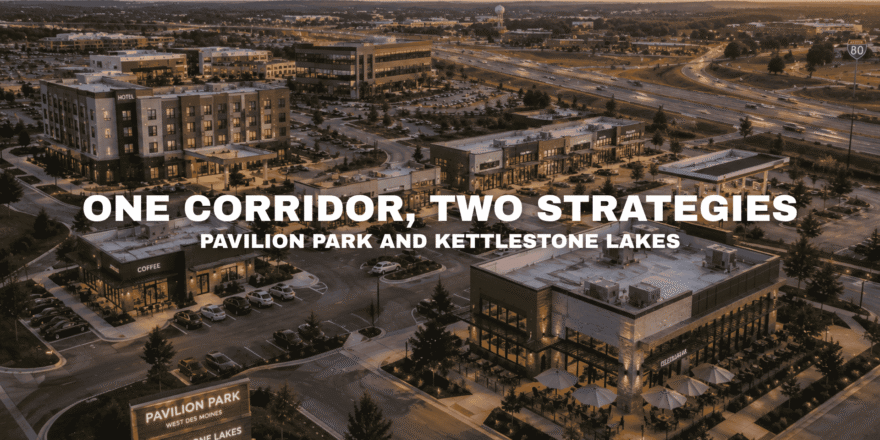
Pavilion Park sits on that corner, a 260-acre master-planned development in one of the fastest-growing suburbs in Iowa. For a coffee operator, the appeal is simple. The daily cup is a habit, and habits reward locations people already drive past.
Coffee keeps growing, and more of it is poured away from home
The United States coffee market reached roughly 24.98 billion dollars in 2026 and is on track to hit about 31.05 billion dollars by 2031, a steady annual growth rate of around 4.45 percent, according to Mordor Intelligence. The out-of-home side, meaning coffee houses and quick-service counters, is climbing faster at about 5.22 percent as hybrid work settles into a predictable weekly pattern.
Demand for the product itself is not in question. The National Coffee Association has long reported that coffee is the most-consumed beverage among American adults, with a clear majority drinking it every day. A business built on a product people buy 300 mornings a year is a business built on repeat traffic, and repeat traffic is exactly what a well-placed suburban corner can deliver.
Why a coffee shop West Des Moines drivers pass fits this exact corner
Interstate 80 carries about 42,500 vehicles a day past Pavilion Park, and Grand Prairie Parkway adds thousands more as the surrounding neighborhoods fill in. The EP True Parkway extension is now open, giving the development a second access point and making the morning in-and-out even easier.
Coffee is an impulse and a routine at the same time. People do not plan a special trip for it, so visibility and a quick entrance matter more than almost anything else. A drive-thru coffee shop West Des Moines commuters can see from the road, pull into, and leave within a couple of minutes is positioned to win the morning rush that already flows through this interchange.
Rooftops and workers, not only passing cars
West Des Moines has grown to roughly 75,500 residents, up about 9.5 percent since 2020, with a median household income near 86,594 dollars. That combination of steady growth and spending power is the profile coffee brands look for when they scout new markets.
The daytime population matters just as much. Major employers including Wells Fargo, Athene, and Holmes Murphy sit minutes away, and new housing keeps arriving nearby, from the 199 apartments at The Cunningham to the luxury condominiums at The Continental. A coffee shop here can serve the 7 a.m. commuter, the mid-morning office run, and the afternoon pickup near the planned high school, filling every daypart instead of one.
The season works in a coffee operator’s favor
Late fall and winter are the strongest months for coffee sales. Holiday drinks drive higher tickets, cold weather pushes volume, and December turns gift cards into a second revenue stream that carries into January. An operator that opens ahead of the winter stretch captures the busiest season of the year right out of the gate.
That seasonality pairs well with a growth corridor. New residents form new routines quickly, and the shop that is open and visible when they move in often becomes the default stop for years.
A metro that national brands are watching
The broader Des Moines metro is one of the Midwest’s steadier growth stories, which is why national and regional coffee brands keep scouting it. The area pairs a low cost of doing business with a young, employed population and a constant stream of new residents moving in from larger, pricier markets.
For a coffee concept choosing between markets, a growing suburb inside a growing metro lowers the risk of any single location. West Des Moines, with its rising rooftop count and strong household incomes, is exactly the kind of submarket that supports more than one successful coffee shop rather than only one. An operator who plants a flag early claims the best corner before the field gets crowded.
What Pavilion Park gives a coffee operator
Pavilion Park offers about 125 acres of commercial ground available now, with pad sites and build-to-suit flexibility that suit a drive-thru footprint. The development is zoned for commercial and mixed uses, and the master plan places retail where the traffic and the rooftops actually are. You can see the full layout on the project overview.
Being early in a master-planned corridor is its own advantage. The first coffee shop on a growing corner builds the habit before any competitor arrives, and that head start is hard to unwind later. Operators who want to talk through available pads can reach the team through the contact page.
Frequently asked questions
Is a coffee shop West Des Moines location better as a drive-thru?
For a commuter corridor like this one, yes. Most morning coffee purchases are quick and habitual, so a drive-thru format that lets drivers enter and exit fast tends to capture more of the rush-hour traffic than a sit-down-only model.
How much traffic passes Pavilion Park each day?
Interstate 80 carries about 42,500 vehicles a day at this interchange, and Grand Prairie Parkway adds steady local volume. The newly opened EP True Parkway extension gives the site a second access point.
Is the West Des Moines market big enough to support another coffee shop?
West Des Moines has about 75,500 residents and continues to grow, with strong household incomes and large nearby employers. The national out-of-home coffee segment is also expanding faster than the overall market, which points to room for well-located shops.
What size parcel does a coffee shop need at Pavilion Park?
Most drive-thru coffee concepts work on a compact pad site. Pavilion Park offers pad sites and build-to-suit options within its 125 acres of available commercial land, so the footprint can be sized to the concept.
Why open before winter?
Late fall and winter are the peak season for coffee sales, with holiday drinks and gift cards lifting both volume and ticket size. Opening ahead of that stretch lets a new shop capture its busiest months immediately and build regular customers early.