For decades, commercial real estate success was measured by one primary metric:
Traffic count.
How many cars passed by.
How many people entered the site.
But today, that metric alone is no longer enough.
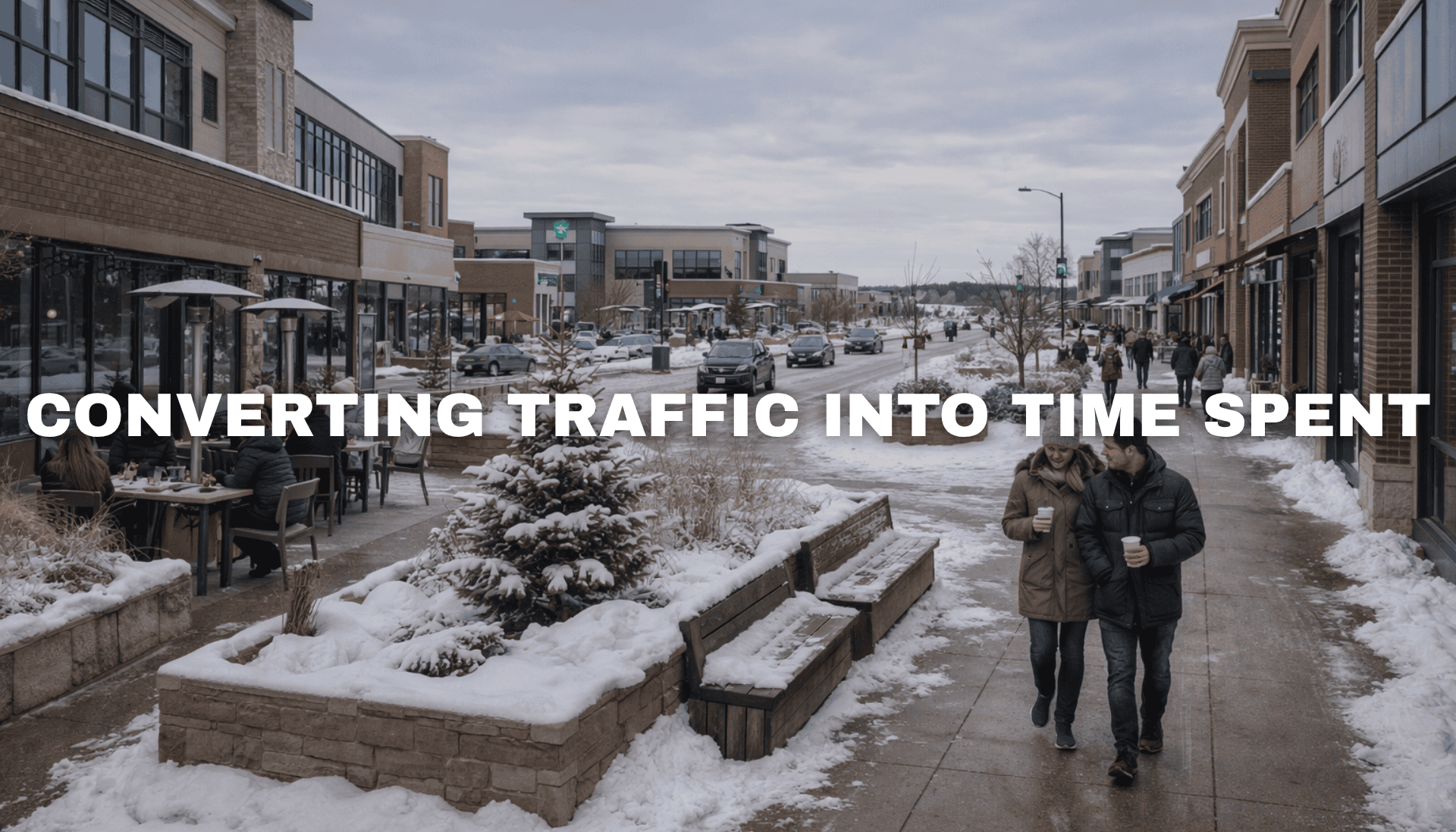
The most successful developments are not just capturing traffic — they are converting it into time spent.
Because time spent drives:
- Higher sales per visit
- Cross-tenant interaction
- Stronger brand engagement
- Increased repeat visits
At Pavilion Park, this shift is built into the design.
The Old Model: Capture and Move On
Traditional interstate retail follows a predictable pattern:
- Exit
- Fuel
- Grab food
- Leave
These environments are transactional. They serve a purpose, but they do not create attachment.
Customers rarely stay longer than necessary.
They rarely explore beyond a single stop.
They rarely return unless convenience demands it.
That model limits long-term value.
The New Model: Capture and Engage
Modern mixed-use developments are designed differently.
They aim to:
- Slow people down
- Encourage exploration
- Extend visits
- Create reasons to stay
Pavilion Park is positioned to execute this model by combining interstate access with destination design.
Step One: Capture the Traffic
Everything starts with access.
Pavilion Park benefits from:
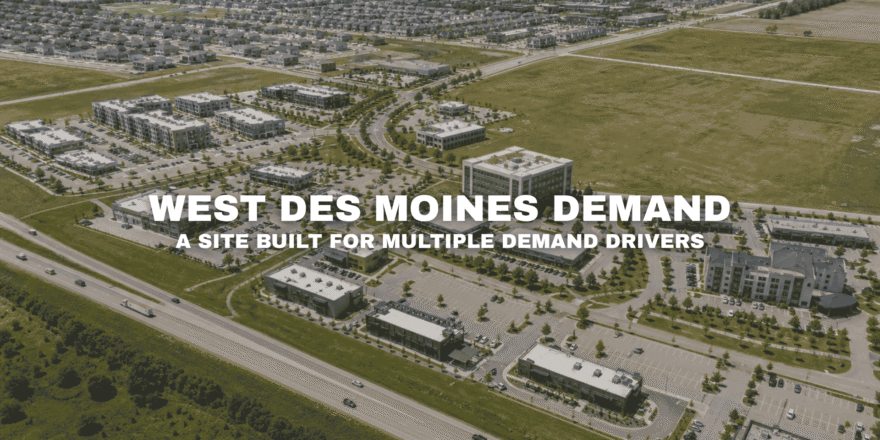
- Immediate proximity to I-80
- Direct connection via Grand Prairie Parkway
- High daily traffic volumes from regional travel
This ensures a consistent flow of:
- Business travelers
- Regional visitors
- Commuters
- Weekend and event traffic
But capturing traffic is only the first step.
Step Two: Give People a Reason to Stay
The real differentiator is what happens after arrival.
Pavilion Park is designed to support:
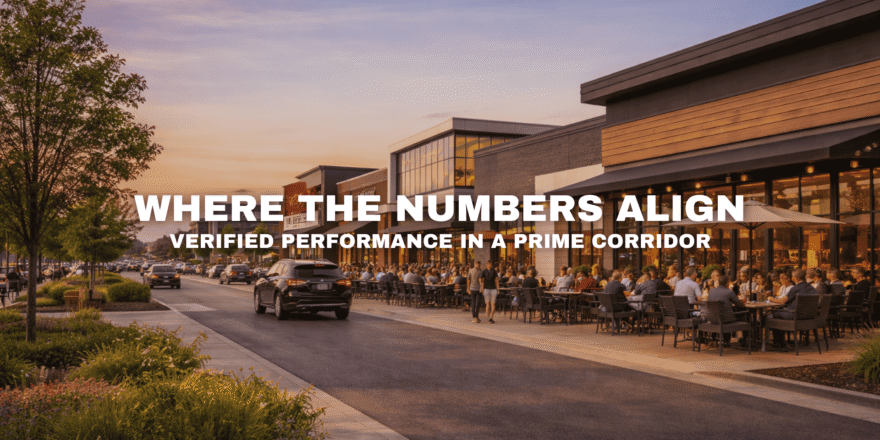
- Dining clusters rather than isolated restaurants
- Hospitality that integrates with surrounding uses
- Retail that complements — not competes
- Spaces that encourage movement between tenants
Instead of one-stop visits, the environment encourages:
- Dinner followed by dessert
- Shopping paired with services
- Meetings that extend into social time
This layering increases dwell time naturally.
Step Three: Create an Environment, Not Just a Site
Time spent is influenced by how a place feels.
Pavilion Park’s mixed-use approach allows for:
- Walkable connections between uses
- Open space and visual cohesion
- A layout that encourages exploration
- A sense of destination rather than pass-through
Customers are more likely to stay when the environment supports it.
This is where many interstate sites fall short.
They provide access — but not experience.
The Role of Hospitality in Extending Visits
Hotels play a critical role in dwell time strategy.
At Pavilion Park, hospitality uses can:
- Anchor overnight stays
- Support corporate travel
- Drive evening dining traffic
- Generate multi-day engagement
Guests staying on-site are not just passing through.
They become part of the daily activity cycle:
- Breakfast
- Meetings
- Dinner
- Entertainment
This extends the economic impact of each visitor.
Cross-Tenant Synergy: The Multiplier Effect
When time on site increases, tenant performance improves.
Customers who stay longer are more likely to:
- Visit multiple businesses
- Spend more per visit
- Return more frequently
- Build habits within the development
For example:
- A dinner visit becomes dinner + drinks + dessert
- A business meeting becomes meeting + meal
- A retail stop becomes retail + service + follow-up visit
This is the multiplier effect of dwell time.
Why Location Still Matters
Even the best-designed developments need strong positioning.
Pavilion Park’s advantage is that it combines:
- Interstate visibility
- Corridor connectivity
- Access to West Des Moines and Waukee
- Placement at the gateway to a growing commercial spine
This ensures that the pool of potential visitors is not limited.
High traffic feeds the system.
Good design converts it.
A Natural Extension of the Corridor
Pavilion Park’s role in the broader Grand Prairie Parkway corridor strengthens its dwell time potential.
Traffic captured at the interstate:
- Moves north into the corridor
- Interacts with additional commercial nodes
- Returns through the same path
This creates multiple touchpoints for engagement.
Over time, Pavilion Park becomes part of a larger pattern of movement — not just a single stop.
Why This Matters for Developers and Tenants
Dwell time is no longer a secondary metric.
It is a primary driver of:
- Tenant success
- Lease performance
- Property value
- Long-term viability
Developments that convert traffic into time spent tend to:
- Outperform traditional retail centers
- Attract higher-quality tenants
- Maintain relevance as consumer behavior evolves
Pavilion Park is positioned to deliver on all three.
The Shift From Convenience to Experience
Consumers still value convenience.
But they increasingly choose locations that offer:
- Better environments
- More options
- Social interaction
- Memorable experiences
Pavilion Park bridges both worlds.
It captures convenience-driven traffic from I-80 — then converts it into experience-driven engagement.
Traffic Is the Start. Time Is the Goal.
The next generation of commercial development is not defined by how many people pass by.
It is defined by how long they stay.
Pavilion Park represents that shift.
From:
- Exit → to experience
- Traffic → to engagement
- Pass-through → to destination
For tenants, developers, and investors, that distinction is critical.
Because in modern retail and mixed-use environments, the value is not just in being seen.
It’s in being experienced.