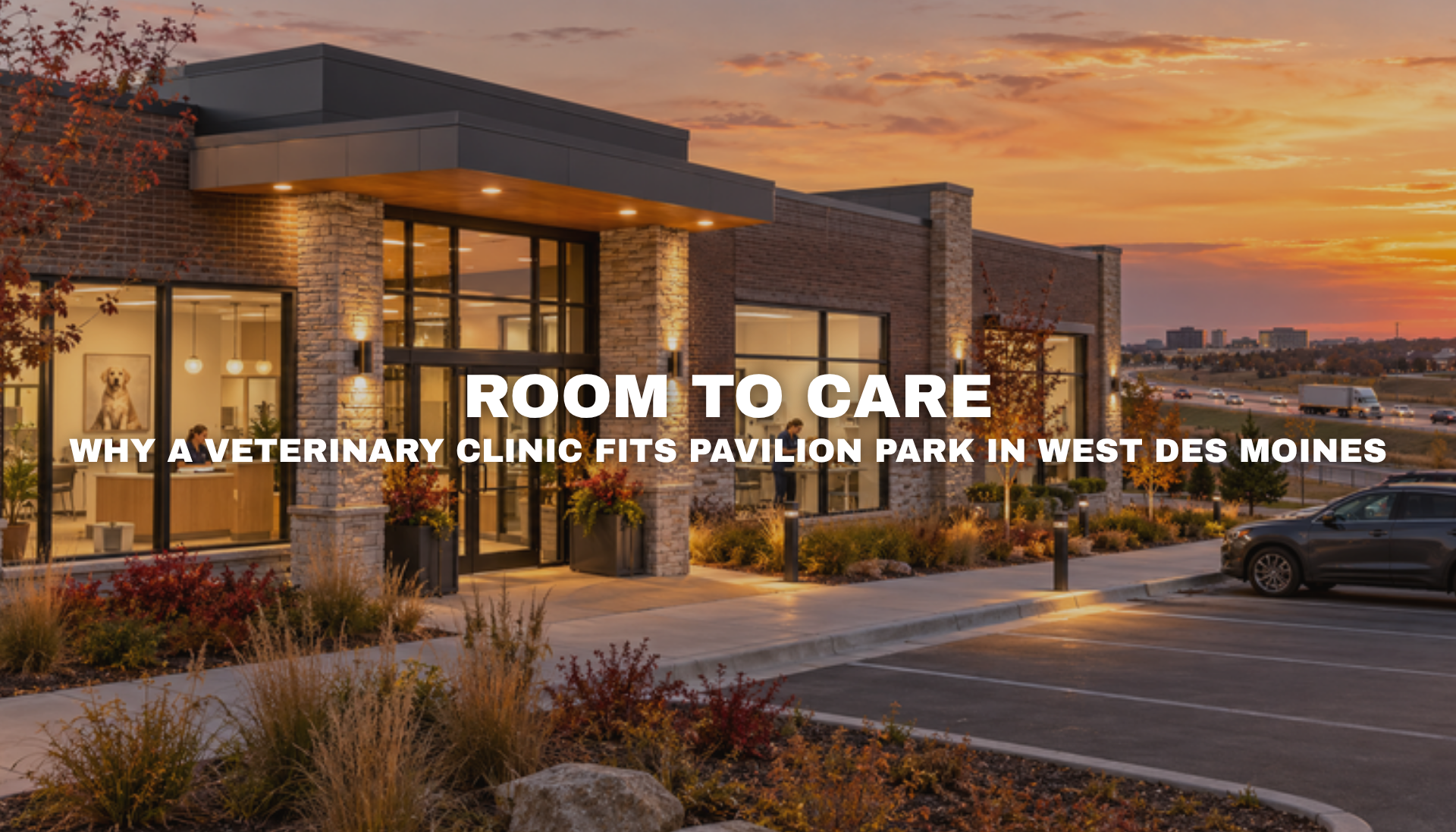
The holidays are one of the busiest stretches of the year for pet care. Families travel, boarding fills up, and the weeks around Thanksgiving and the new year send a wave of appointments to clinics that are already running near capacity. A veterinary clinic West Des Moines pet owners can reach in a few minutes would meet real demand at Pavilion Park, on the growing corner of Interstate 80 and Grand Prairie Parkway.
Pet care has quietly become one of the most durable consumer categories in the country, and the suburbs filling in around this interchange are exactly where that demand is concentrated.
Pet care is a large market that keeps growing
The United States veterinary services market reached about 40.3 billion dollars in 2026 and is projected to climb to roughly 68.7 billion dollars by 2033, an annual growth rate near 7.9 percent, according to Grand View Research. That growth sits inside a total U.S. pet industry that has passed 158 billion dollars in annual spending.
What makes the category so steady is how owners treat it. People delay plenty of purchases when budgets tighten, but veterinary visits, vaccinations, dental work, and medication tend to stay on the calendar. The American Veterinary Medical Association has documented how firmly pet ownership is embedded in American households, and spending on animal health has held up even through uncertain years.
Why a veterinary clinic West Des Moines families use fits this corner
Veterinary care is a local, repeat relationship. Owners want a clinic close to home for routine visits and close enough to reach fast in an emergency. That makes neighborhood access the single most important factor, and a central corner inside a growing residential corridor checks the box.
Pavilion Park sits where the rooftops are heading. Interstate 80 carries about 42,500 vehicles a day past the site, Grand Prairie Parkway feeds the surrounding neighborhoods, and the EP True Parkway extension is now open as a second way in. A veterinary clinic West Des Moines residents can fold into the daily drive is easier to choose and easier to return to.
A growing suburb means a growing pet population
West Des Moines has reached roughly 75,500 residents, up about 9.5 percent since 2020, with a median household income near 86,594 dollars. New households arrive with pets, and higher-income households spend more per animal on preventive care, dental services, and specialty treatment.
The housing around Pavilion Park reflects that growth, from the apartments at The Cunningham to new single-family neighborhoods and the condominiums at The Continental. More homes within a short drive means a larger base of patients, and a clinic that opens as the area fills in grows alongside it rather than fighting for space later.
The season adds to the case
Late fall and winter bring a predictable lift in demand. Holiday travel drives boarding and daycare, colder months raise routine and urgent visits, and the start of a new year pushes wellness plans and checkups. A clinic positioned before that stretch captures the busy season instead of chasing it.
Boarding and grooming add to the picture. Many modern clinics bundle those services, which smooths revenue across the year and gives families one trusted place for everything their pet needs.
Capacity is the other half of the story
Demand is only part of what makes this a strong market. The industry has faced a well-documented shortage of veterinarians and support staff, which means established clinics in growing suburbs often run full and schedule routine visits weeks out.
That matters for a new entrant. A clinic opening in an underserved, growing corridor does not have to pull patients away from competitors. It can absorb the overflow that current clinics simply cannot fit, which shortens the ramp to a healthy caseload. In a corridor adding rooftops as quickly as this one, new capacity tends to fill faster than in a flat market.
What Pavilion Park offers a veterinary operator
Pavilion Park has about 125 acres of commercial ground available now, with pad sites and build-to-suit flexibility that fit a clinic with exam rooms, surgical space, and a boarding wing. The development is zoned for commercial and medical uses, and the master plan keeps care uses near the neighborhoods they serve. The full layout is on the project overview.
There is also a timing advantage. A clinic that establishes itself early in a master-planned corridor becomes the default choice for families as they move in, and those relationships tend to last for the life of the pet. Operators can reach the team through the contact page to discuss available parcels.
Frequently asked questions
Is there room for another veterinary clinic West Des Moines pet owners can use?
West Des Moines is growing steadily, and the national veterinary market is expanding at close to 8 percent a year. A growing residential corridor like the one around Pavilion Park adds new pet-owning households faster than existing clinics can absorb them, which supports new, well-located capacity.
What makes a good location for a vet clinic?
Proximity to homes is the top factor, since care is a frequent, repeat relationship and sometimes an emergency. A central corner with strong road access, like the Interstate 80 and Grand Prairie Parkway interchange, makes a clinic easy to reach for routine and urgent visits alike.
How big a site does a veterinary clinic need?
It depends on the model. A standard clinic needs room for exam rooms, surgery, and parking, while a clinic that adds boarding or daycare needs more. Pavilion Park offers pad sites and build-to-suit options across its available commercial land to match either approach.
Why does the holiday season matter for veterinary demand?
Holiday travel drives boarding and daycare bookings, colder weather increases routine and urgent visits, and the new year brings a wave of wellness checkups. Opening before that stretch lets a clinic capture its busiest season immediately.
What is driving pet care spending?
Owners increasingly treat pets as family and keep up with preventive care, dental work, and medication even when other budgets tighten. That behavior, along with a U.S. pet industry above 158 billion dollars, keeps veterinary demand resilient.