Most commercial developments are designed as destinations.
Few are designed as experiences that continue beyond their own boundaries.
Along Grand Prairie Parkway, something different is happening.
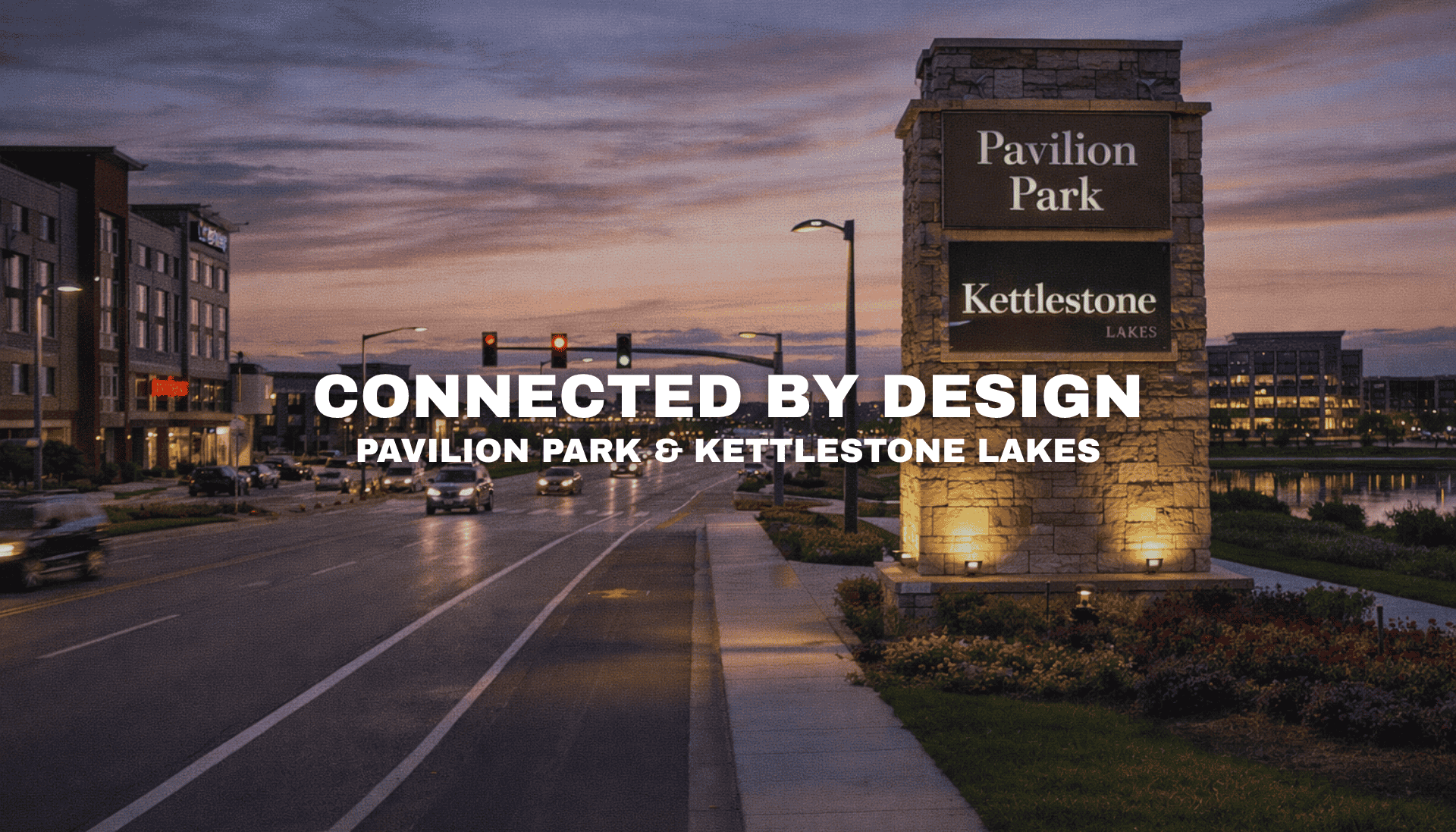
Pavilion Park and Kettlestone Lakes are not isolated projects competing for attention. They are two strategically positioned nodes within a single, connected corridor — one that moves seamlessly from interstate access to community-centered activity.
For visitors, it doesn’t feel like two places.
It feels like one continuous commercial experience.
Where the Experience Begins
For most visitors, the journey starts at Pavilion Park.
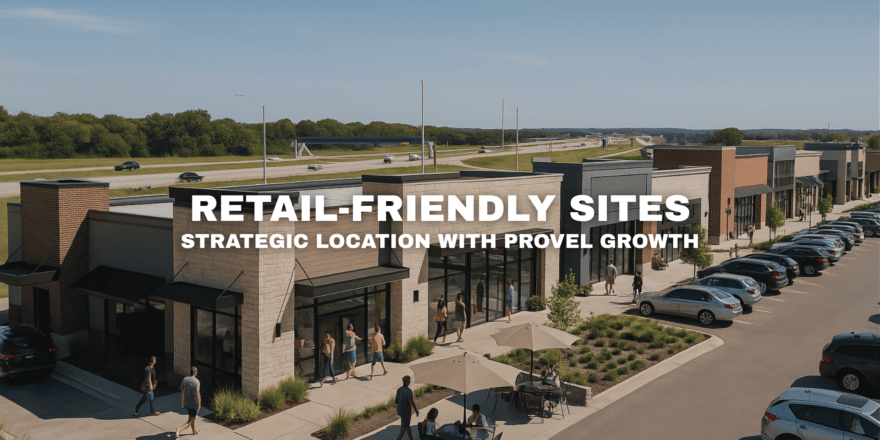
Located at the I-80 interchange, Pavilion Park serves as the entry point into the corridor:
- Interstate travelers exit here
- Regional traffic converges here
- First impressions are formed here
This is where:
- Drivers decide to stop
- Brands capture initial attention
- The tone of the corridor is set
But the experience doesn’t end at the exit.
It moves.
Grand Prairie Parkway as the Connector
Once traffic leaves I-80, Grand Prairie Parkway becomes more than a road.
It becomes a guided commercial path.
It connects:
- Pavilion Park at the southern gateway
- Expanding residential neighborhoods
- Retail and service users along the corridor
- Kettlestone Lakes further north in Waukee
This design creates something powerful:
Continuity.
Instead of disconnected stops, visitors move through a sequence of destinations that build on each other.
Where the Experience Deepens
As traffic moves north, it transitions into Kettlestone Lakes.
While Pavilion Park captures attention, Kettlestone captures engagement.
Kettlestone is designed around:
- Walkability
- Lifestyle-driven retail
- Community integration
- Repeat-use tenants
This is where:
- People spend more time
- Families return regularly
- Daily routines are built
The shift from Pavilion Park to Kettlestone is intentional:
From entry → to immersion.
Why This Connection Matters
Most developments rely on a single type of traffic:
- Either destination-driven
- Or convenience-driven
This corridor benefits from both.
Pavilion Park delivers:
- Regional traffic
- Interstate exposure
- First-time visitors
Kettlestone Lakes delivers:
- Local traffic
- Repeat visits
- Community engagement
Together, they create a system where:
- Traffic is captured early
- Reinforced along the corridor
- Sustained through local demand
That layered demand structure is rare — and highly valuable.
The Flow of Movement
Think of the corridor as a loop rather than a line.
Visitors:
- Exit I-80 at Pavilion Park
- Move north through the corridor
- Engage with multiple stops
- Continue into Waukee and surrounding areas
- Return along the same path
This creates:
- Repeated exposure for tenants
- Multiple interaction points with customers
- Stronger brand recall
Instead of one chance to capture a customer, businesses benefit from several.
Designed for Complement, Not Competition
One of the most important aspects of this corridor is intentional differentiation.
Pavilion Park is positioned for:
- Visibility
- Access
- Hospitality
- Corporate and regional uses
Kettlestone Lakes is positioned for:
- Lifestyle
- dining and entertainment
- community-based retail
- daily-use services
This separation allows both to thrive without competing for the same role.
Instead, they:
- Reinforce each other’s strengths
- Support broader tenant mixes
- Create a more complete commercial environment
A Better Experience for Tenants
For businesses, this connected design translates into real advantages.
Tenants benefit from:
- Traffic originating at Pavilion Park
- Continued exposure along the corridor
- Destination reinforcement at Kettlestone
- Increased dwell time across locations
This is especially valuable for:
- Restaurant groups with multiple concepts
- Fitness and wellness brands
- Retailers building market presence
- Service providers seeking visibility and convenience
Instead of choosing one type of location, tenants can leverage both.
A Stronger Story for Developers
Developers within this corridor are not marketing a single site.
They are marketing:
- A connected growth system
- A unified traffic pattern
- A multi-node commercial experience
This allows for:
- Faster leasing conversations
- Stronger tenant narratives
- More compelling long-term positioning
It shifts the conversation from:
“Why this site?”
to:
“Why this corridor?”
The Long-Term Advantage of Connection
As development continues along Grand Prairie Parkway, the connection between Pavilion Park and Kettlestone will only strengthen.
More rooftops.
More traffic.
More tenants.
More reasons to stay within the corridor.
What is now a strong connection will become a fully integrated commercial spine.
Early positioning within that spine offers long-term advantages that isolated sites cannot match.
One Corridor. One Experience.
The most successful commercial environments are not defined by individual parcels.
They are defined by how those parcels work together.
Pavilion Park introduces the corridor.
Kettlestone Lakes anchors the community within it.
Grand Prairie Parkway connects the two into a seamless experience.
For visitors, it feels natural.
For tenants, it performs consistently.
For developers, it creates lasting value.
Designed to Work Together
Pavilion Park and Kettlestone Lakes represent a new model of suburban development — one where connection replaces competition.
A place where:
- Traffic flows continuously
- Experiences build on each other
- Demand is layered and sustained
Not two separate developments.
But one corridor, designed to work together.