In commercial real estate, visibility is usually discussed from the road.
Can drivers see the sign?
Can they recognize the brand?
Can they identify the entrance?
Those questions matter. But they only tell part of the story. The real customer experience begins in the first 90 seconds after someone exits, turns in, parks, and understands where they are.
That moment is called the arrival sequence, and it can shape whether a commercial district feels easy, premium, confusing, rushed, or worth returning to.
At Pavilion Park, the arrival sequence is one of the development’s biggest advantages. The project is positioned at the southeast corner of I-80 and Grand Prairie Parkway in West Des Moines, with a 260-acre master-planned layout and commercial parcels intended for retail, hospitality, office, and multifamily use. Pavilion Park’s site also notes that only 125 acres remain, with prime interstate visibility through the Grand Prairie Parkway interchange.
That combination gives Pavilion Park something valuable: the chance to shape a visitor’s first impression from the interstate into the district.
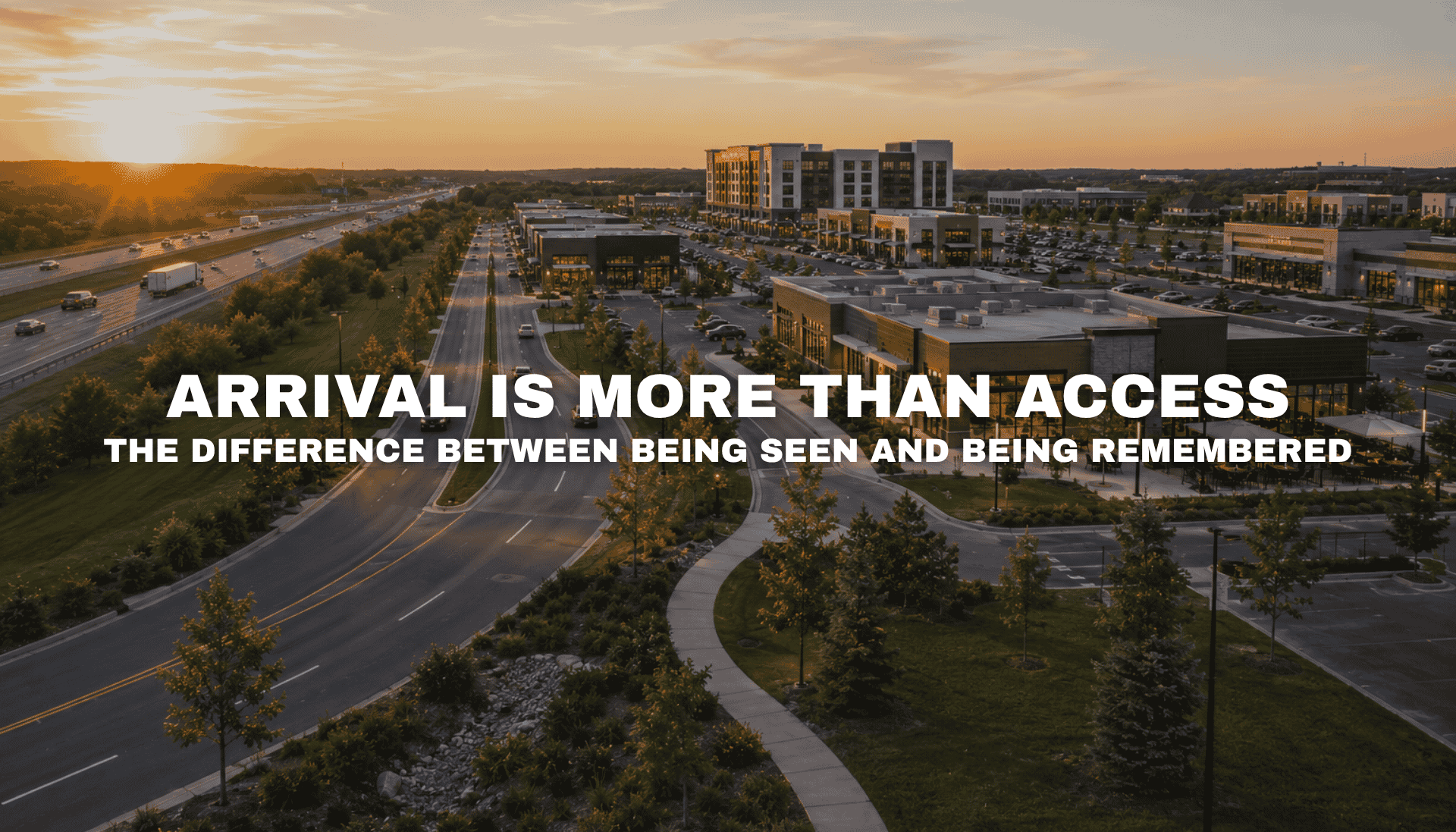
Arrival Is More Than Access
Access gets people to a site. Arrival determines how they feel once they get there.
A strong arrival sequence should answer several questions quickly:
Where do I go?
Where do I park?
What is here?
Is this place easy to navigate?
Does this feel like somewhere I want to spend time?
When those questions are answered intuitively, people relax. They stay longer. They explore. They notice more tenants. They return more easily.
When the arrival sequence is poor, even a strong location can underperform.
Pavilion Park’s advantage is that its master-planned scale allows arrival to be designed deliberately rather than patched together after the fact.
The I-80 Decision Point
Interstate visibility can generate awareness, but the real opportunity begins when drivers choose to exit.
That decision is not casual. It often happens because a driver has a need: food, fuel, lodging, a meeting, a service appointment, shopping, or a place to stop before continuing.
Pavilion Park sits at that decision point. It can serve regional travelers, nearby residents, employees, families, and future visitors moving through the Grand Prairie Parkway corridor.
The stronger the arrival experience, the more likely those users are to convert from drivers into customers.
Designing for Clarity
Large mixed-use developments must avoid one major problem: confusion.
When a development has multiple uses, internal roads, parking fields, outlots, and future phases, the visitor experience can become fragmented. Pavilion Park has the opportunity to avoid that by making clarity a core design principle.
That means:
- Clear entry points
- Logical internal roads
- Visible building fronts
- Easy parking transitions
- Strong landscaping cues
- Consistent signage zones
- Simple movement between uses
These elements may not sound as exciting as a new tenant announcement, but they directly influence customer behavior.
A restaurant benefits when guests can find it easily. A hotel benefits when travelers can identify the entrance quickly. An office user benefits when clients feel confident arriving. A medical provider benefits when patients are not stressed before an appointment.
Why Arrival Matters for Hospitality
Hotels are especially dependent on arrival experience. A guest arriving from I-80 wants the process to feel simple.
They want to see the hotel, identify the entrance, park easily, and understand what amenities are nearby. If the surrounding area feels organized and active, the hotel feels more valuable.
Pavilion Park’s location near I-80 and Grand Prairie Parkway gives hospitality users strong visibility, but the internal arrival sequence can elevate that visibility into a better guest experience.
That matters for hotel flags, extended-stay concepts, business travelers, and family visitors.
Why Arrival Matters for Retail and Dining
Restaurants and retailers rely on impulse, comfort, and return visits. If a customer feels that a site is easy to enter and enjoyable to navigate, they are more likely to come back.
Pavilion Park can support retail and dining concepts by creating a setting where visitors can:
- Arrive from the interstate
- Park without frustration
- See multiple businesses at once
- Move between restaurant, retail, hotel, and service uses
- Understand the district quickly
That type of environment encourages more than one-stop visits. It encourages discovery.
Why Arrival Matters for Office Users
Office tenants care about arrival because it affects employee and client perception.
A company located in a confusing or isolated setting has to work harder to create a professional impression. A company located in a well-planned mixed-use environment benefits from the quality of the district around it.
At Pavilion Park, office users can benefit from visibility, access, and proximity to surrounding amenities. The arrival sequence helps turn those attributes into a daily workplace advantage.
Employees want easy commutes and nearby conveniences. Clients want a location that feels credible and accessible. Pavilion Park can support both.
Arrival as a Leasing Tool
For brokers and developers, arrival experience can become part of the leasing story.
Instead of only marketing acreage, traffic counts, and visibility, Pavilion Park can be positioned around how the site functions for real users.
That includes:
- How customers enter
- How traffic circulates
- How businesses are seen
- How different uses support each other
- How visitors experience the site from the first turn
This is especially valuable for national tenants and franchise groups. They do not evaluate sites only on location. They evaluate how that location performs.
The Difference Between Being Seen and Being Remembered
Visibility helps a development get noticed. Arrival helps it get remembered.
A customer may see Pavilion Park from the road. But they will remember whether it felt easy, organized, active, and worth returning to.
That distinction is important.
Commercial districts that are remembered become part of people’s routines. They become where people stop before getting on the interstate, where guests stay when visiting the area, where employees meet clients, where families grab dinner, and where services become habits.
The First 90 Seconds Can Shape the Next 10 Years
Pavilion Park’s location gives it a strong starting point. Its scale gives it flexibility. Its I-80 and Grand Prairie Parkway positioning gives it visibility.
But the real long-term value will come from how the development feels when people arrive.
The first 90 seconds matter because they set the tone for everything that follows.
For retailers, restaurants, hotels, office users, service providers, and developers, Pavilion Park offers more than access.
It offers the chance to create an arrival experience that turns visibility into confidence, traffic into visits, and first impressions into long-term value.